Investigation
How the Kremlin turns schoolchildren into future soldiers in occupied Ukraine
When Russian forces occupy a Ukrainian town, schools are often targeted first.
An investigation into hundreds of Telegram posts from Russian propaganda channels operating in occupied Ukraine since 2022 reveals a systematic campaign to militarise and indoctrinate children through schools.
Channels such as “Genichesk in the foreground”, “Berdyansk is ours”, “New Melitopol” and “Official Berdyansk”, which publish reports and images from classrooms, expose how education has been transformed into a tool for erasing Ukrainian identity and cultivating loyalty to Russia — preparing even the youngest pupils for future military roles.
Oleksiy*, a 60-year-old school head, saw his life upended on 2 March 2022, when Russian tanks rolled into his village in the Zaporizhzhia region.
Classes stopped, children fled, and fighting moved closer. When occupation authorities demanded that the school reopen under the Russian curriculum, he refused. Pressure followed immediately. Parents were pushed to switch to the Russian language and passports.
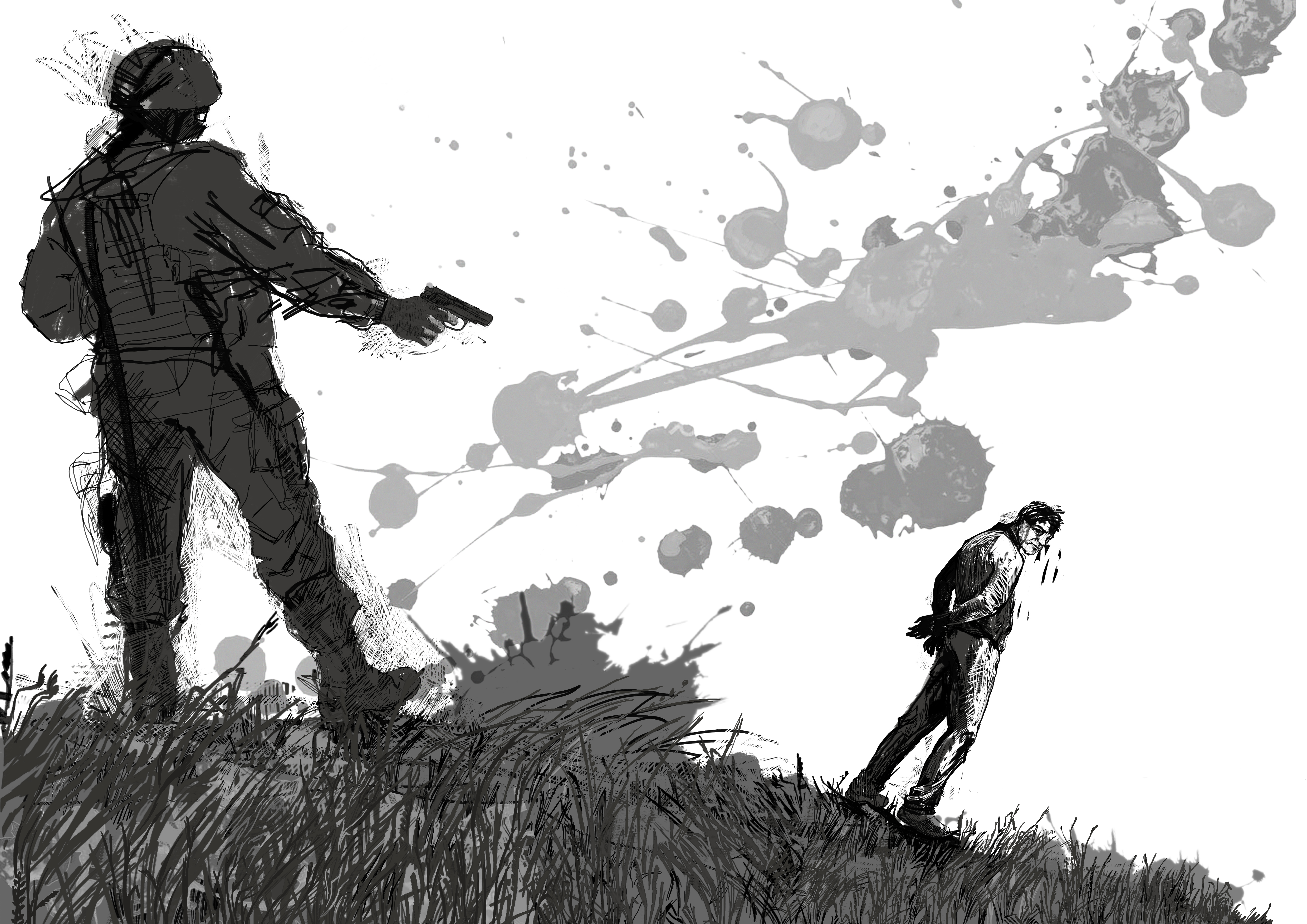
Armed Russian soldiers visited Oleksiy’s home at least 11 times. On one occasion, they drove him 10 kilometres into the steppe, held him at gunpoint, and showed false documents bearing his signature, accusing him of “collaborating with Ukraine”.
He was abandoned to walk home. Threats persisted, including death threats, forced conscription, and reprisals against his wife, while their passports were confiscated.
In April 2024, Oleksiy received a deportation order accusing him of “illegal entry into the Russian Federation,” banning him for 20 years and stripping him of his property.
Russian forces escorted him and his wife across Russia to the Georgian border, returning their documents, and they made it back to Ukraine. Oleksiy now runs his former school online, while inside the occupied territories, however, the picture remains different.
'I grew up under occupation'
“I grew up under occupation,” says Alyona* (19), whom we met in Kyiv. Until recently, she lived in Simferopol, Crimea, and was eight when Russia seized the peninsula in 2014. After 2022, she says, school propaganda became more aggressive. “It was a turning point. They want to capture young people’s minds. That way, there will be no rebellion.”
In her final years, each day began with the Russian anthem, and the entire school environment was structured to enforce loyalty. The invasion was framed as a heroic mission. Ukrainian history, she adds, is largely distorted or erased. “In 2014 Ukrainian was taught in my school. Within a year it became optional, then disappeared,” she says.
Almenda data shows the scale. Before Crimea’s occupation, all pupils studied Ukrainian language and literature; by 2024, just 0.5 percent did.
After 2022, the same pattern spread to newly occupied areas in 2023–2024, 43 percent of pupils in Zaporizhzhia and 60 percent in Kherson studied Ukrainian.
In June 2025, Russian media reported an order removing Ukrainian from all schools under Russian control.
By the end of 2024, 1.6 million children lived under Russian control, nearly 600,000 of them school-age.
The occupied Zaporizhzhia region counts 41,000 pupils, Kherson 20,000, Luhansk 100,000, and Donetsk 147,000.
Youth movements and military groups in classes
Youth movements are a central Kremlin tool for controlling children. The two main structures are Yunarmiya, created by Russia’s defence ministry in 2016 to promote military discipline, and the Movement of the First, a Kremlin-run successor to the Soviet Pioneers. Both operate across Russia and occupied Ukraine, often appearing together in schools to deliver propaganda-heavy “patriotic education”.
Yunarmiya is openly militarised and active in all occupied Ukrainian regions, particularly those seized after 2022.
In 2025, Moscow funded Yunarmiya with one billion roubles, mainly via Vladimir Putin’s “Youth and Children” project and the defence ministry. In 2024, it involved 44,600 minors in occupied territories, while the Movement of the First counted nearly 122,000.
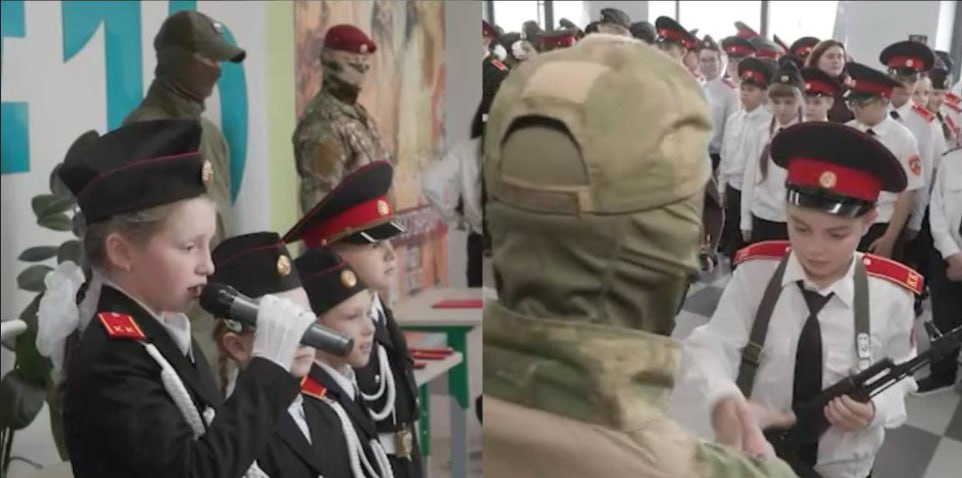
Analysed Telegram posts often show pupils in Zaporizhzhia and Kherson regions standing in formation, wearing Yunarmia’s red berets, taking oaths and singing the Russian anthem. Children are also taken to Russia for militarised competitions, appearing in uniform and carrying organisation’s flags.
Inside schools, Yunarmiya works with the Russian military, which regularly enters classrooms, turning them into extensions of the armed system.
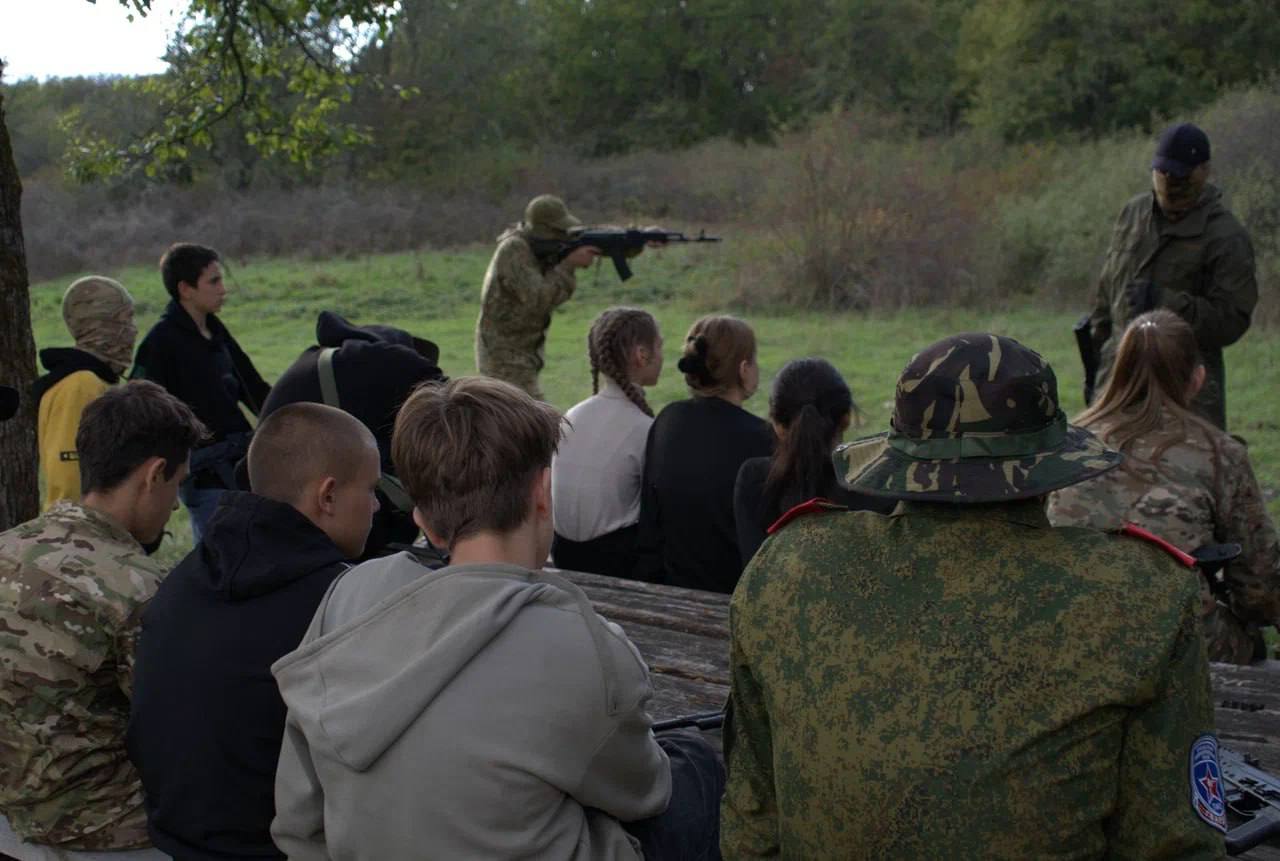
Telegram posts show armed groups brought in to display weapons, while some schools stage full military-style events with marching. Sports tournaments also rely on weapons training.
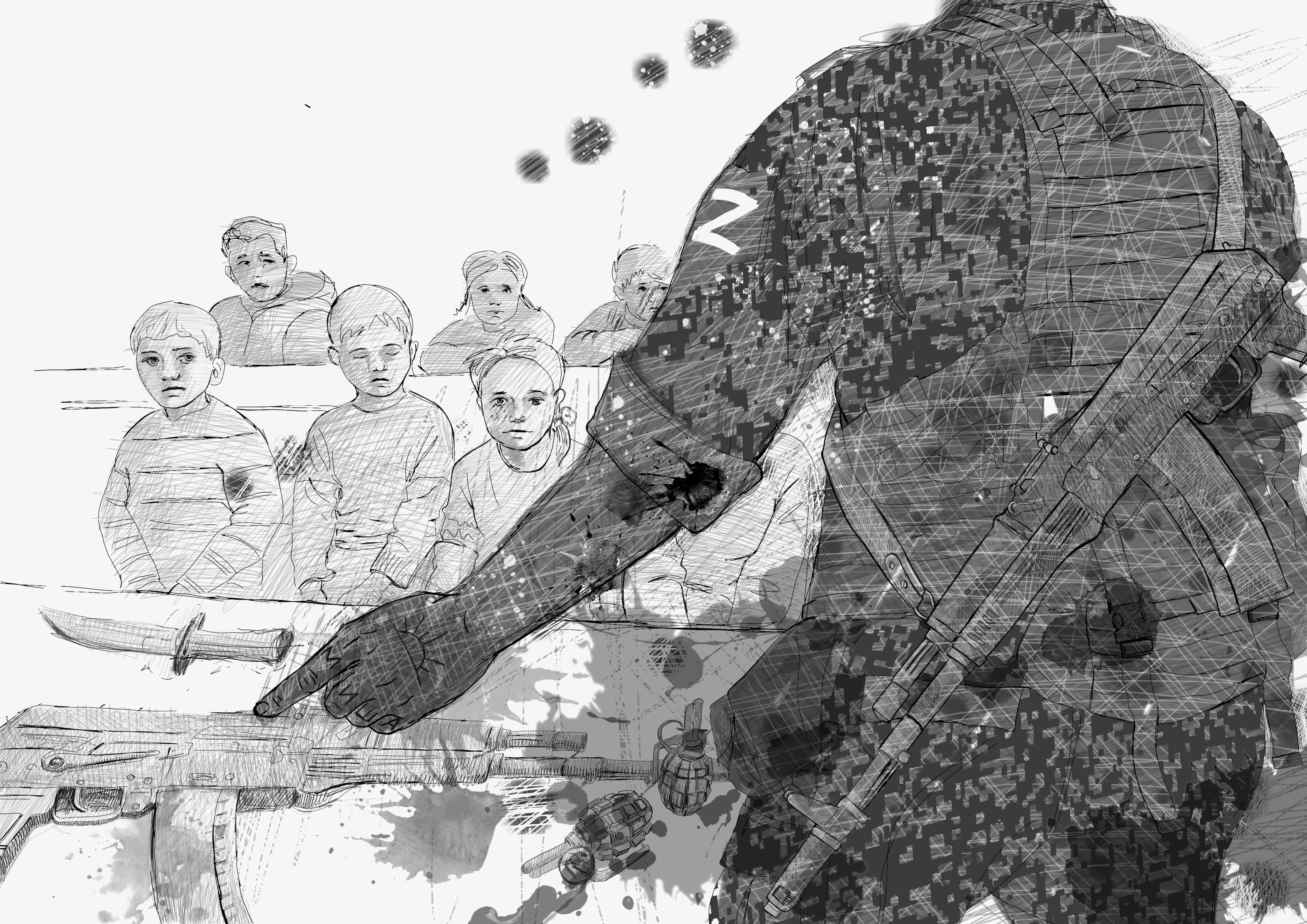
Alyona, who grew up in occupied Crimea, confirms. “From the fifth grade, military pressure begins in schools. During special lessons, there are exercises with weapons.” Boys are pushed to register with enlistment offices as early as 14 or 15, and some are taken to firing ranges. Young people, she says, are treated as “cannon fodder”.
Posts show the Russian National Guard, Rosgvardia, among the most active actors.
Subordinate to Putin, its units run so-called “Lessons of Courage” in schools and orphanages, presented as patriotic education, along with “Cadet classes”, where military discipline blends with lessons.
These programmes start early — one post from occupied Zaporizhzhia shows around 200 very young children taking an oath.
Dnepr fighters, Grom-2, Afghanistan veterans, and other military groups also appear in schools.
Militarised camps and networks for indoctrination and assimilation
Trips to camps for minors in Russia and occupied Ukraine are branded as recreational programmes, but have become tools of ideological influence as well.
Crimea’s Artek is the best-known case, but Telegram investigation reveals children are also sent deep into Russia — from the Moscow region to the far east, the Caucasus and Adygea.
In March 2023, one channel posted the news that children from the occupied Kherson area would be sent to Primorye, in Russia, for “rest and study”, following an agreement between the Russia-imposed governor, Vladimir Saldo, and the state-run centre Okean, linked to Yunarmia.
According to Almenda, in the summer of 2024 alone, over 220,000 children were sent to camps in Crimea, Russia, and Belarus.
Moscow has built a network of military-patriotic centres, including VOIN, created in December 2022 on Putin’s initiative. Active in occupied territories since 2023, VOIN trained around 17,000 young people that year and had 22 branches there under direct Kremlin oversight.
Sergei Kiriyenko, deputy head of the presidential administration, oversaw the opening of its Berdyansk branch. The aim, activists say, is to forge a militarised Russian identity centred on war and sacrifice – language echoed by VOIN itself.
Violations of both Hague and Geneva conventions
Almenda finds it breaches at least seven international norms, including bans on war propaganda, militarising minors, and altering the legal status of protected children. The removal of Ukrainian education and forced indoctrination violates both the Hague and Geneva Conventions.
Among the worst abuses are forced transfers and imposed Russian citizenship. Videos from the Telegram channels show schoolchildren handed Russian passports in official ceremonies, while parents are forced to obtain citizenship to keep their children in school.
Ukraine’s ombudsman Dmytro Lubinets told local media that teens raised under occupation since 2014, now captured fighting for Russia, often report having had no real choice.
Alyona, now in the free Ukraine, says many still hope to leave but are trapped by fear, isolation, and lack of information. “But living like that, the way they live there, is not a life.”
*Names have been changed in this story to protect the identities and safety of those involved.
This article was previously published on La Stampa and supported by the Polish-German Cooperation Foundation
Author Bio
Julia Kalashnyk is a Ukrainian freelance investigative and data journalist covering the Russian invasion of Ukraine and issues related to war crimes. Her work has appeared in Euronews, La Stampa, Gazeta Wyborcza, and other outlets.
Related articles
Tags
Author Bio
Julia Kalashnyk is a Ukrainian freelance investigative and data journalist covering the Russian invasion of Ukraine and issues related to war crimes. Her work has appeared in Euronews, La Stampa, Gazeta Wyborcza, and other outlets.