Feature
Bulgaria's nuclear waste dilemma exposes storage failures across Europe
With a nearly 10 percent share of the world's electricity production in 2024, and over 70 years of operation, nuclear power plants around the world are producing 430,000 tonnes of spent fuel, of which about two-thirds remains in storage, according to the Nuclear Energy Agency.
In Europe (excluding Russia and Slovakia), more than 60,000 tonnes of spent nuclear fuel are stored — most of it in France.
No country in the world yet has a deep geological repository for spent nuclear fuel in operation. Finland is the only country currently building a permanent repository for this most dangerous type of nuclear waste.
Apart from Finland, only Sweden and France have effectively designated a location for a repository for high-level radioactive waste.
The US is running a pilot project for waste isolation. However, this repository is used only for long-lived transuranic waste from nuclear weapons, not for spent nuclear fuel from commercial reactors.
Thus, the challenges with the disposal of this type of waste are numerous, and in recent years, it has begun to be seen as a recycling resource.
Bulgaria's Kozloduy nuclear power plant (NPP), for example, has 4,500 spent nuclear fuel (SNF) assemblies in storage that should have been shipped to Russia for reprocessing and downsizing to vitrified high-level radioactive waste, but this has not happened since 2022 because of the war in Ukraine.
Realistically, however, they could be transformed from a burden to a new fuel. Such a possibility exists in France, and as early as the end of 2022, France's Framatome, which next autumn is due to start supplying analogue fuel to the current Russian fuel for one of Kozloduy NPP's operating units, has offered to recycle the accumulated Russian assemblies.
However, no decision has been taken in this direction, although the government's draft strategy for SNF (sitting on the shelf for a second year) foresees the possibility of contracting the reprocessing of the used fuel in an EU member state.
The option of shipping the cassettes to France after 2030 is even explicitly written down.
Extracting uranium and plutonium from spent-fuel assemblies
France is where the Orano la Hague plant is located, which is one of the main players in the world of spent nuclear fuel recycling. The process has been going on for 10 years.
After robots remove the used rods, they endure a five-year bath, followed by a second bath in a nitric acid solution for the fuel already cut into small pieces. There, the nuclear material is dissolved and finally 96 percent of the material (95 percent is uranium and one percent is plutonium) is ready for processing.
A series of complex chemical operations convert the uranium into uranyl nitrate and the plutonium becomes plutonium oxide to be used to produce a fresh fuel called MOX — mixed oxides of uranium and plutonium — to reduce the need for natural uranium by 25 percent.
In the meantime, the uranium is stored as a strategic reserve awaiting re-enrichment. The remaining minimal waste is vitrified. However, they are very highly radioactive.
The main customer of Orano la Hague is Electricité de France, which delivers the used fuel from its 58 reactors in France there.
But it also processes fuel from Germany, Switzerland, Belgium, Italy and the Netherlands, as well as Australia, China and Japan.
Bulgaria's reprocessed raw material in Russia
Kozloduy NPP has produced thousands of spent nuclear fuel (SNF) assemblies since the first of its six units was commissioned in 1974.
Some 8,500 of these have now been sent to the Russian Mayak facility for reprocessing and storage under a contract with the Russian company TVEL.
Cassettes used before Bulgaria's accession to the EU on 1 January 2007 remain in Russia, and cassettes burned after that date and the resulting vitrified high-level radioactive waste are supposed to be returned to the country for long-term disposal.
The fissile materials (isotopes of uranium and plutonium) obtained during the reprocessing of spent nuclear fuel in Russia remain the property of Bulgaria and are stored there until required.
In fact, Bulgaria has significant stocks of fissile material stored in Russia that can be used to prepare innovative fresh nuclear fuel for the future, according to the still unapproved strategy document.
It is not clear, however, what these quantities are, as opposed to the vitrified ones that we should take back. We are talking about the return of about 1,006 tonnes of heavy metals.
These are derived from the spent fuel shipped up to 2021 from the four small VVER-440 reactors, which were shut down in 2002 and 2006, and from the two VVER-1000 reactors still operating today.
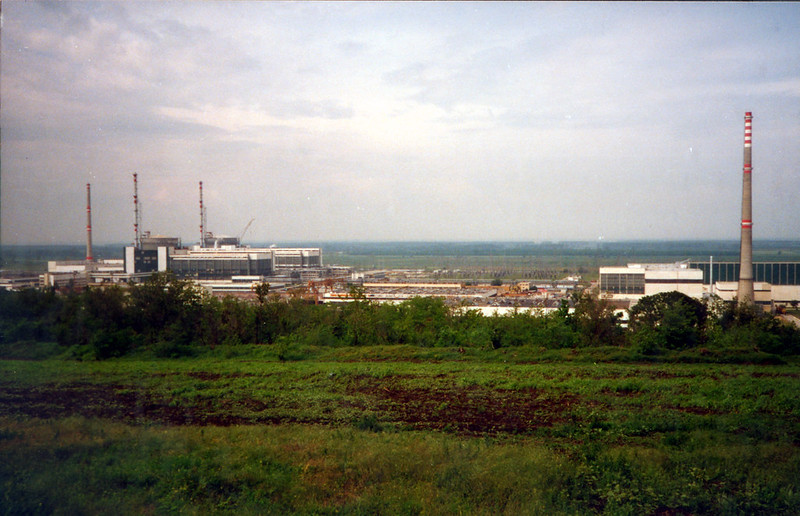
The Kozloduy NPP site still has nearly 4,500 spent-fuel assemblies stored on site in the reactor-adjacent pools, where they can be kept for up to five years, otherwise the metal of the fuel rods begins to corrode, and in the wet and dry spent fuel storage facilities.
Most of the nuclear waste in "storage" comes from the closed reactors; over 1,600 assemblies are from the currently operating thousand-megawatt units.
Storage capacity could be exhausted in 2032
Because of Russia's war in Ukraine, the plant has not sent spent fuel assemblies for reprocessing since 2022. If this continues for much longer, the useful capacity of the spent fuel wet storage will be full in 2032.
This requires that the dry storage facility be expanded to accommodate over 700 VVER-1000 assemblies no later than 2030. This would provide buffer capacity for the operation of the two operating units by 2040.
In response to a question from Mediapool, Kozloduy NPP announced it had taken the necessary steps to expand the dry storage facility for spent nuclear fuel, but did not explain what this means — whether plans have been drawn up, whether there are any public tenders for the capacity increase, how much this will cost the nuclear operator.
Thus, there is currently no clarity on what to do with the growing SNF in Bulgaria.
Last summer, Bulgaria's then energy minister Vladimir Malinov announced that options were being explored to dispose of Kozloduy's spent nuclear fuel in four countries — Finland, Sweden, France and Switzerland — where work is underway to commission underground storage facilities.
However, the issue has not been raised since.
Nobody wants waste in their backyard
Studies of possible sites for the construction of such a repository in the country are also at an absolute standstill.
Analyses of geological structures in northern Bulgaria were made many years ago, but politicians are afraid to raise the issue more seriously for fear of civil discontent — no one wants even household waste in their "backyard", let alone nuclear.
Otherwise, estimates in the draft update of the nuclear waste strategy give the sum of €2.5bn as a baseline estimate for building a deep geological repository in Bulgaria.
Capacity and operating costs are not indicated.
For the time being, there is no solution to the SNF reprocessing problem, and its volumes will grow at the rate of 84 assemblies per year, which are taken out of the two VVER-1000s.
During their operation, by 2047 and 2051 respectively, it is expected that more than 2,400 assemblies will be added to the waste now accumulated in the pools and storage facilities.
And their volume will grow if the new two reactors are built.
To these, however, will be added the spent fuel from the operation of the two new reactors planned for the Kozloduy site using AP-1000 technology from the US company Westinghouse.
The commissioning of the first of the two units is scheduled for 2034-2035, if a final investment decision is taken and the indicative schedule is met.
The manufacturer of this type of reactors gives an average annual production of 29 tonnes of heavy metal in SNF. With a possible lifetime of 60 years for the two prospective new nuclear facilities, this means about 2,600 tonnes of heavy metals in SNF, according to the ministry of energy.
However, there are problems with the final storage of nuclear waste in a number of other European countries with nuclear power plants.
Spanish storage project suspended
Spain, which operates seven nuclear power units, does not yet have a centralised interim storage facility in operation, although its construction was approved in 2004 at Villar de Canyas (Cuenca). The project has been halted due to political, legal and territorial disputes.
Meanwhile, in 2024, the Spanish government confirmed a plan to close all its nuclear power plants between 2027 and 2035.
However, this does not change the fact that problems with the existing spent nuclear fuel from the operation of its reactors must be resolved. That is about 5,000 metric tonnes of uranium accumulated in used fuel assemblies.
In Romania, where the Cernavodă nuclear power plant operates, the storage of radioactive waste and spent nuclear fuel is not currently a subject of public debate and is not an issue of concern to public opinion.
Very early stages plan for disposal in Romania
The spent fuel assemblies from the two reactors of the Romanian power plant are stored long-term in an intermediate dry storage facility after they have spent at least six years in the special cooling pool of each reactor.
It can stay in dry storage for up to 50 years, as is the practice at Kozloduy NPP.
According to the National Strategy for the Safe Management of Spent Nuclear Fuel and Radioactive Waste developed by the Romanian Nuclear Energy Agency, there are plans to build new final storage facilities.
In addition to one for low and intermediate-level radioactive waste, a deep geological repository for high-level waste is planned in Salini, Dobrudzha region, near the Cernavodă nuclear power plant, which is expected to be operational in 2028.
It is planned to be at a depth of approximately 500-1,000 metres, but the project is still in the site investigation phase. The aim is long-term containment through natural and engineered barriers.
Temporary storage facilities in Czech Republic
Similar to Bulgaria and Romania is the situation in the Czech Republic, where two nuclear power plants are in operation — the older Dukovany NPP from the 1980s and the younger Temelin from the 1990s.
Spent nuclear fuel from both falls into 'interim storage' right on the sites of the plants. These are covered halls where the fuel is stored in special double-walled casks with a lifetime of 60 years. It must then be reloaded.
However, it is not yet transported anywhere.
The government's plan is to build a final deep repository, and it is currently choosing between four or five previously studied options.
The communities near the possible repository sites do not want it there and are trying to protect themselves in any way possible.
However, nuclear power is held in very high esteem in Czech society — and this has increased since the Russian invasion of Ukraine.
The pressure from political parties and the general public for its development is enormous, so it is likely that the resistance of the municipalities on final storage may eventually be overcome.
As for the time horizon, the repository is currently scheduled to begin operation in 2050.
Realistically, most nuclear operators are currently delaying finding a final solution for their spent fuel in the hope that advanced technologies and innovative approaches will make a contribution.
Recycling, however, is certainly part of "cleaning up" the hundreds of thousands of used assemblies lying in storage and turning them into new fuel.
This article was produced as part of the PULSE project, a European initiative that supports cross-border journalistic cooperation. The article was first published by Vladislava Peeva, Mediapool.bg (Bulgaria), with contributions from Lola García-Ajofrín, El Confidencial (Spain), Claudia Pîrvoiu, Hotnews (Romania) and Petr Jedlička, Denik Referendum (Czech Republic).
Translated by Rossitsa Petcova (Voxeurop)
Author Bio
Vladislava Peeva (Mediapool.bg), Lola García-Ajofrín (El Confidencial), Claudia Pîrvoiu (Hotnews.ro) and Petr Jedlička (Denik Referendum)